%201.svg)
Across the country, families are voicing a clear and powerful message: bilingualism matters.
A new report from The Century Foundation (TCF), What Families Want: New Data on Public Demand for Bilingual Education, tells a compelling story - one rooted in the dreams, heritage, and aspirations families hold for their children. Rich with data and grounded in authentic family voice, this report confirms what SEAL (Sobrato Early Academic Language) has championed for more than 15 years: families overwhelmingly want schools that help their children learn—and keep—their home languages as they gain English.
This research, authored by Dr. Conor P. Williams, Dr. Maggie Marcus, and Dr. Monique Escobedo, builds on decades of evidence showing that bilingual and dual-language immersion (DLI) programs help English Learners thrive academically while strengthening their linguistic and cultural identities. But this report goes deeper. It centers families and asks the most important question of all:
What do families truly want when it comes to language learning for their children?
The answer? Loud and clear: bilingual education matters.
A Commitment to Opportunity, Identity and Belonging
The report highlights a rapidly growing commitment to multilingual education across California—and not just among multilingual families. For SEAL, this is more than a trend. It is a resounding affirmation of the work we carry into classrooms, schools, and communities every day: multilingualism is an asset that strengthens students, families, and the future of California.
Key findings from the report includes:
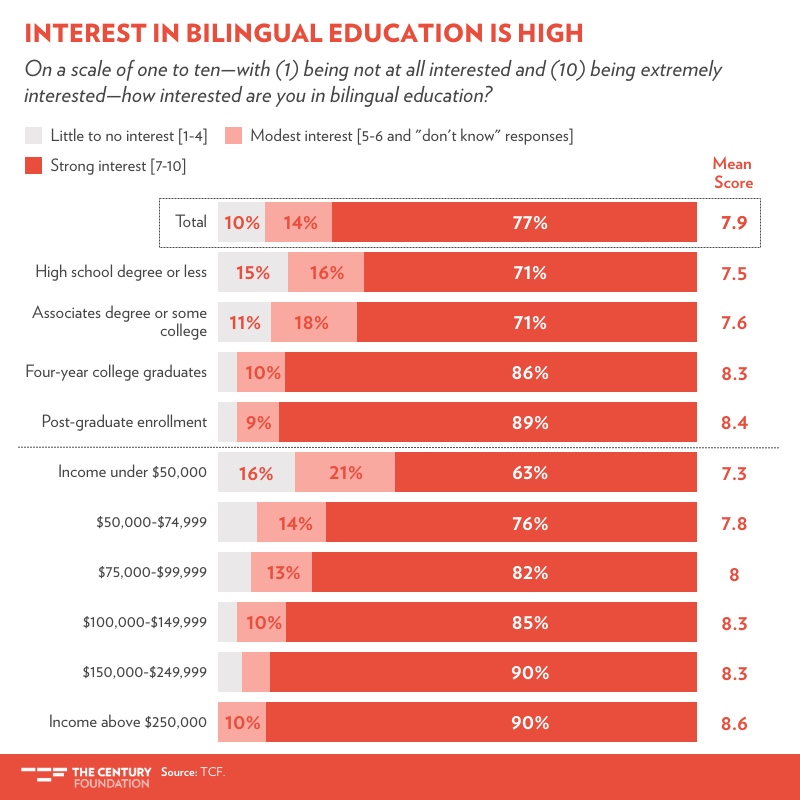
- Across California, in six focus groups and a survey of 1,000 families, interest in bilingual education averaged 7.9/10, and for dual-language immersion it was 7.8/10.
- Among families with multilingual children, an astonishing 94% said it was “extremely” or “very” important that their children keep their home language as they master English.
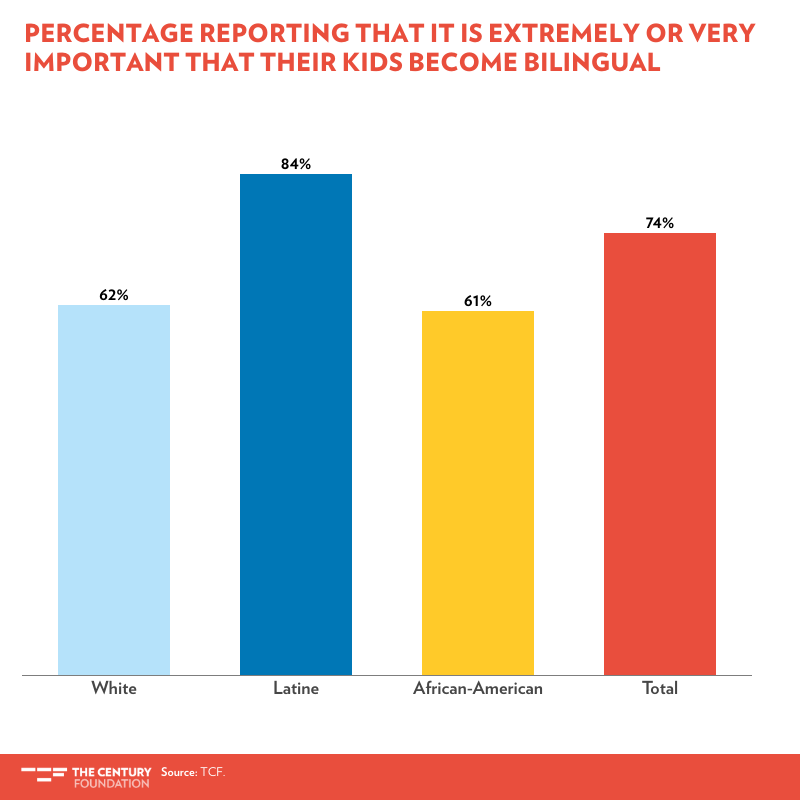
- Even among English-only families: 55% said it was “extremely” or “very” important for their children to become bilingual.
- Families described bilingualism as a source of opportunity, identity, and belonging; connecting their children to relatives, culture, and broader career possibilities.
- Nearly 70% of Latine parents would choose bilingual education if it were available, and over 90% percent want their children to be bilingual.
- Strong support for bilingualism spans across cultural, racial, income, and educational backgrounds.
But There’s a Gap: Demand Outpaces Access
If families want bilingual programs, why aren’t they widely available?
Because supply isn’t keeping up.
Many families reported limited access to bilingual or dual-language schools in their neighborhoods. Some even tried changing addresses to secure access - a concern that disproportionately impacts families of color and low income communities.
That’s a problem. Especially given what research shows: well-designed two-way dual-language immersion (with a mix of native English-speakers and native speakers of another language) offers huge benefits — academically, linguistically, socially.
What needs to happen — listening to families, investing in inclusive options
The report doesn’t just highlight the problem, it points a path forward. Among its recommendations:
- Expand bilingual and dual-language options, especially in communities with high numbers of English Learners.
- Ensure culturally responsive, multilingual outreach so families receive information in languages they speak and trust.
- Protect equitable access so English Learners are not pushed out as demand increases among more privileged families.
Policymakers and education leaders: this is a call to act - not in the distant future but now.
What it Means for SEAL
SEAL’s work in more than 300 schools echoes the very experiences families shared in this report: children flourish when their languages and cultures are honored as assets.

For over 15 years, SEAL has advanced California’s vision for Global California 2030 and brought the English Learner Roadmap to life through high-quality instruction, integrated language development, and strong family partnerships.
This report affirms what SEAL educators, leaders, and partners have long known:
bilingual education is not a niche - it’s a statewide priority rooted in families’ deepest hopes for their children.
And we are proud to stand alongside partners like Parent Institute for Quality Education (PIQE), whose longstanding commitment to elevating family voice helped shape this report. Their survey findings echo TCF’s results and underscore the powerful commitment Latine families—and all families—have to bilingualism.
Looking Forward
As California continues to be a leader in multilingual education, SEAL urges decision-makers to prioritize families’ voices and invest in policies that make bilingual learning accessible to all students. This involves expanding dual-language programs, strengthening the pipeline of bilingual teachers, and ensuring equity is a core principle as demand for these programs increases.
Families have spoken—loudly and clearly. Now it is up to us to honor their vision for a California where every child learns and thrives in two or more languages.
Read the full report by The Century Foundation: What Families Want: New Data on Public Demand for Bilingual Education. Authors: Dr. Conor P. Williams, Dr. Maggie Marcus, and Dr. Monique Escobedo.
Read More News from SEAL

Learn about changes in policy, up-to-date research, and unique practices to support Dual Language and Multilingual Learners. And don’t forget to sign up for our newsletter here.
%202.png)