%201.svg)
A Morning That Stays With You
Last month, on a brisk fall morning at Edenvale Elementary School in San José, I witnessed something I haven’t stopped thinking about. The school was alive with the everyday sounds we all know—parents wishing their children a good day, teachers welcoming students into warm classrooms, kids running across the play yard bundled in sweaters and laughter.
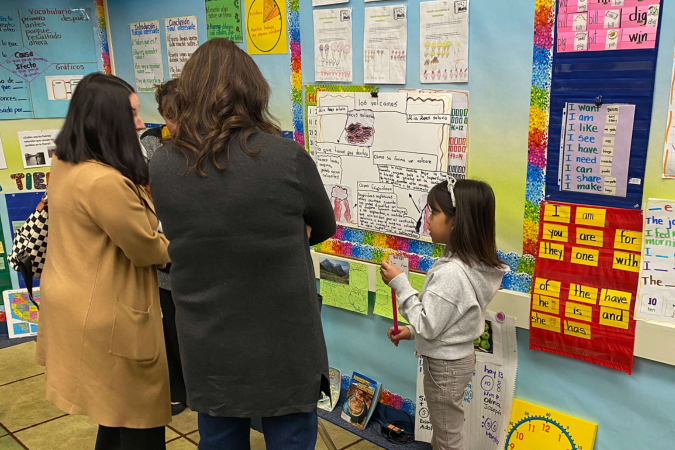
But this morning was different. A group of visitors—educators from across the region, district leaders, and SEAL supporters—gathered for a demonstration visit to see what multilingual, joyful learning looks like when SEAL’s methods come to life.
Our first stop was a 2nd grade classroom, where students were hosting a Gallery Walk of projects on erosion and environmental change. The room buzzed with anticipation. The students had already presented to their classmates and other classes—and today, they were ready to present to their families and us.
As groups of visitors approached each child, tiny hands shot up with confidence and excitement signaling they were ready to present. And then came the question asked naturally, without hesitation:
“English or Spanish?”
“Inglés o español?”
Bilingual Learning in Action
No matter which language the visitor chose, the students launched into their presentations with pride and precision. They explained erosion, magma, electricity, tornadoes, and volcanic eruptions with the depth of young scientists, and did so seamlessly in the language that best served their audience.
I observed students switch between English and Spanish effortlessly, not because it was rehearsed, but because both languages live comfortably in their learning. Their voices, joyful. Their confidence, unmistakable. Their understanding, profound.
When Families are Fully Included
.png)
What moved me just as deeply were the families.
Parents were able to engage fully in their children’s learning without language barriers keeping them on the sidelines. They saw their children shine, and their children saw their own brilliance reflected in the eyes of their families.
This is what SEAL makes possible. This is the power of honoring language, culture, and identity in the classroom.
What SEAL Makes Possible
As we continue empowering multilingual learners, I ask you to Rise With Us. Your support ensures more classrooms look like this—alive with belonging, brilliance, and bilingual joy.
With gratitude,
Annel Aguayo
Read More News from SEAL

Learn about changes in policy, up-to-date research, and unique practices to support Dual Language and Multilingual Learners. And don’t forget to sign up for our newsletter here.
.png)